THE HISTORICAL SOCIETY of HARFORD COUNTY, Inc. The Booth Research Center 
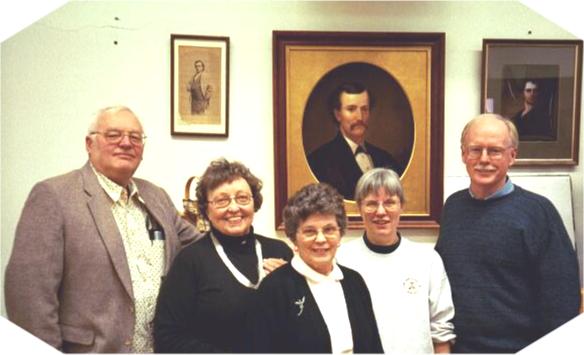
Welcome! This web page is an outgrowth of the Booth Room Committee of the Historical Society of Harford County. This Committee first met in August of 2001. It selected its mission as follows.
The Booth Room Committee was formed as a result of three events:
In addition, the Historical Society of Harford County had many members
who were members of and contributors to PATH. Since its founding in 1885, the
Society has independently built up its own excellent Booth Collection, supported the
preservation of Tudor Hall and the history of the Booth family. An
amazing amount of interest in the Booths persists, and their astonishing stories continue
to be retold over and over and influence current events.
Many thousands of books, plays, novels and articles
have been written on the Booths. (Click to see an abbreviated list
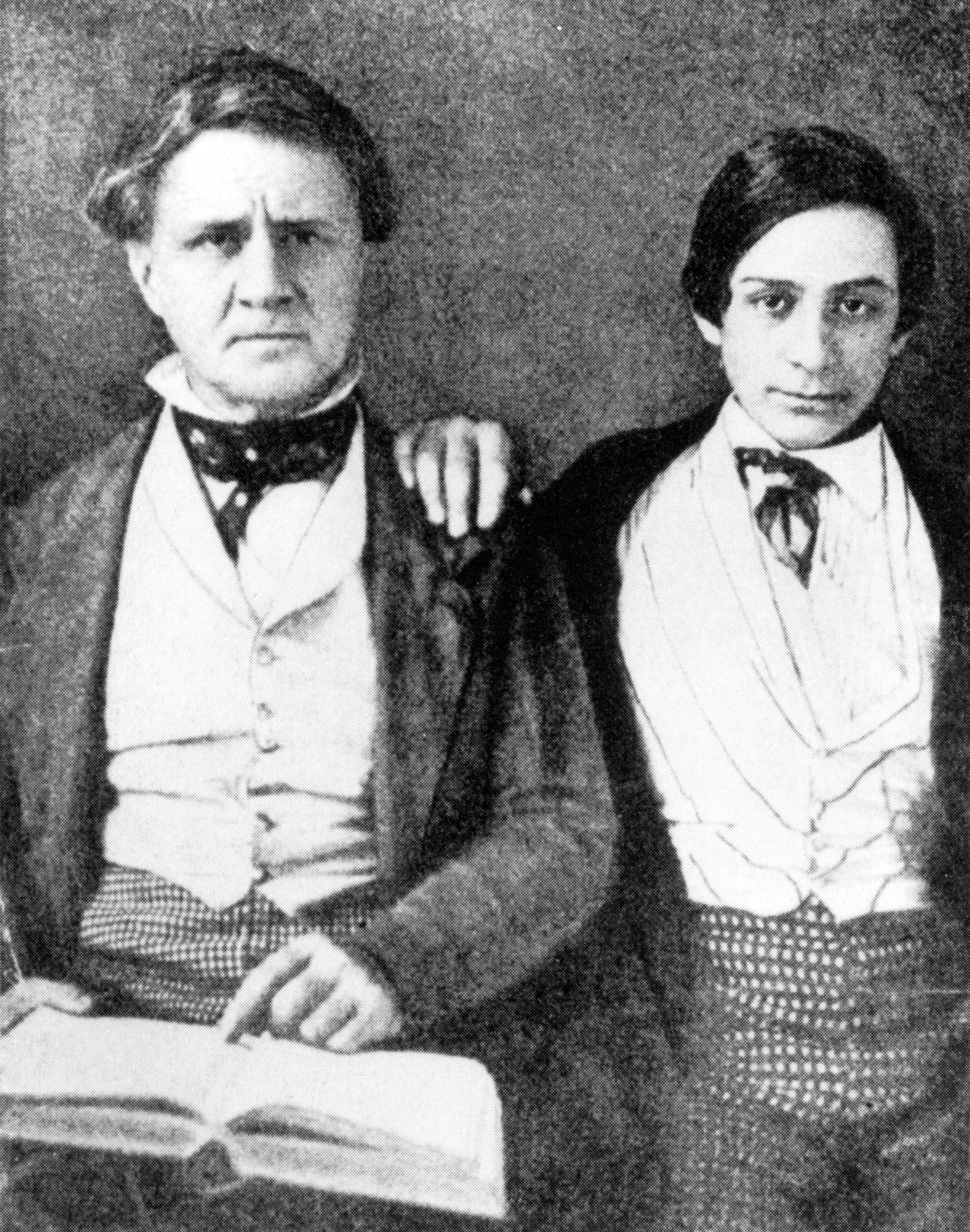
of publications on the Booths.) Who were the Booths of Harford County, Maryland?From 1822 until 1858, Harford County was home to the family of Junius Brutus Booth, one of the foremost actors of his day. For thirty years, he was America's chief Shakespearian player. While he could be a ferocious figure on the stage, he was known as a kind hearted man who taught his children not to kill a living creature, even a rattlesnake. His children included not only Harford County's most famous native son of the 19th century but its most infamous as well. Edwin Booth followed his father onto the stage and established a career that eclipsed his father's. John Wilkes Booth followed his father and older brother onto the stage and was well on his way to establishing a career as illustrious as Edwin's. However, the outbreak of the Civil War tragically intervened changing not only the course of his life but the lives of his family and the history of the nation as well. Born in London on May Day 1796, Junius Brutus Booth sailed for America in the spring of 1821 leaving behind a floundering stage career, a wife, and a two-year-old son. However, as Booth ventured forth, he was not alone. He was accompanied by the young and beautiful Mary Ann Holmes who was expecting his child. Junius and Mary Ann arrived in Norfolk, Virginia, on 30 June 1821. Almost immediately, Junius began a successful whirlwind tour that took him to six states and a number of major cities including New York, Baltimore, New Orleans, and Washington, D.C. Thus began a career that would make Junius Brutus Booth a major figure on the American stage for the next 30 years. Mary Ann gave birth in Charleston, South Carolina, to their first son, Junius Brutus Booth, Jr. On 19 August 1822, Junius made a down payment on 150 acres three miles from Bel Air in rural Harford County. Exactly what brought Junius to consider Harford County as a country retreat for his new family in the first place is not known. However, two of his father's cousins lived in Baltimore and had married women from Harford County. Whatever brought Junius here; there is little doubt that the beauty and serenity of the area appealed to his love of the natural world and his desire for a retreat from the turmoil of the theatrical world. Asia Booth Clarke later indicated her parents fled Baltimore to escape a yellow fever epidemic raging there that summer. In that day and age it was common, for those who could afford it, to own summer homes in the surrounding countryside. Junius purchased a log house located on a neighbor's farm and had it moved to a location near a spring on his new farm. In this log house, it is believed eight of the ten Booth children, including Edwin and John Wilkes, were born. While Junius Jr. was a successful actor and theatre manager, he was not as famous as Edwin or John Wilkes. The youngest son, Joseph, became a doctor in New York. 
If you would like to work for the Booth Research Center,
please contact or visit Mary Cardwell on a Wednesdays
between 9 AM and 1 PM at the Historical Society,
telephone number 410-838-7691. A display of Booth History is being set
up at Tudor Hall by the Booth Research Center. Contributions may be mailed to:
|